Before Dr. Raymond Cho was a psychiatrist at Baylor College of Medicine, he lit up his brain with classical piano.
Like many children, Cho took classical piano lessons. In college, he added a touch of jazz to his playing before he put the fallboard on the keys to dedicate his time to becoming a psychiatrist.
Since 2018, Cho has been professor of psychiatry at Baylor, formerly holding positions at Harris Health and the Michael E. DeBakey Veterans Affairs Medical Center. He is director of Houston Mind & Brain, a specialized center for transcranial magnetic stimulation (TMS) and interventional psychiatry treating depression, OCD and other conditions.
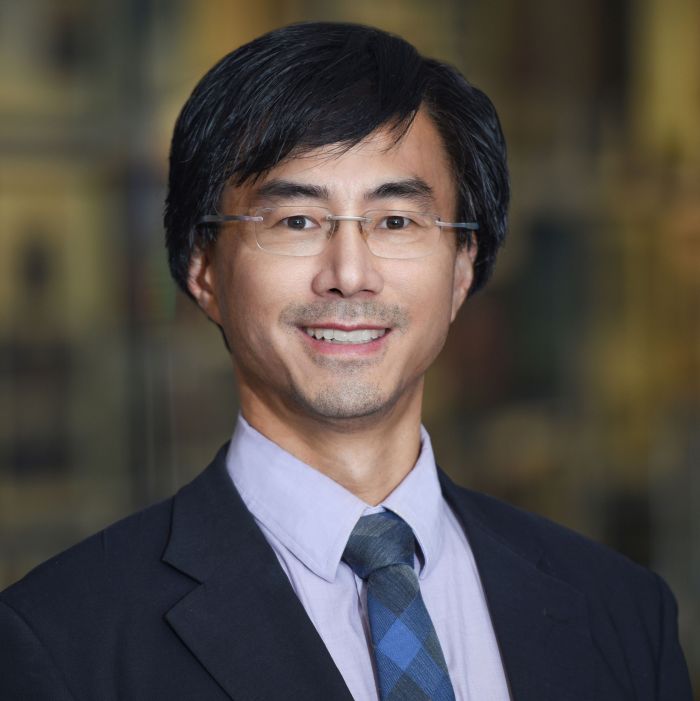
When Cho moved to Houston to continue his career in the Texas Medical Center, he started jazz piano lessons again. But he wanted to do even more in the musical realm.
Through Berklee College of Music’s Composition Department, he learned how to write music in addition to music theory, harmony and proper orchestration. In 2025, Cho received a certificate in film and TV composition music, which pushed him to pursue music as more than a hobby. His college course work included music composed for comedy, drama, romantic comedy or drama and plain fiction.
In June, Cho traveled to Mexico City as a composer fellow for the Texas New Music Ensemble, a group dedicated to the enrichment of Texas communities through contemporary art music. The ensemble operates at the Midtown Arts and Theater Center Houston (MATCH).
“I met a composition teacher and composer and studied composition with her. She has a string quartet that performed in Mexico City, and it was a treat to have (a piece I composed) performed during the Texas New Music Festival,” he said. “I’m happy and proud of that accomplishment.”
While in Mexico, Cho participated in rehearsals, concerts, master classes and group activities exploring the art, music, food and beauty of the capitol city. During the week, he met a conductor who asked if he had plans to write a symphony and “seemed keen to collaborate on that with an orchestra.”
In the next year, Cho plans to compose a fuller symphonic work and hopes to field future collaborations in connection with the Mexico City fellowship.
Cho’s composing so far has been open to any genre, but he will now focus on contemporary classic composition. He believes his connection to music helps him as a psychiatrist and researcher.
“There’s nothing like being involved in the arts. This provides work-life balance and personal fulfillment that can complement professional fulfillment,” he said. “It’s critical to have that to complement your workplace.”
Engaging in music, in particular, is a good complement to science and medicine because it activates abstract reasoning, Cho added. There are visual and perceptual aspects of the acoustic mind, auditory processing and memory involved in both learning and playing music and using science.
“As a consumer of lay-level science around music performance and composing, I know that listening to music activates a chunk of the brain and playing it does even more,” Cho said. “Any level of music appreciation activates multiple parts of your brain.”
By Julie Garcia, senior communications associate in the Office of Communications and Community Outreach
 BCM Family