As an institution, Baylor College of Medicine has helped make Houston and the Texas Medical Center a hub for premium patient care, a destination for exceptional healthcare workers and a spot for scientific research to flourish.
Now, the BCM Innovation Institute wants to make Baylor a place for healthcare innovation, technology development and commercialization.
Dr. Joseph Petrosino, chief scientific innovation officer and professor and chair of molecular virology and microbiology and chief, leads what is now known as Baylor College of Medicine Innovation Institute, which replaces the entity formerly known as BCM Ventures.
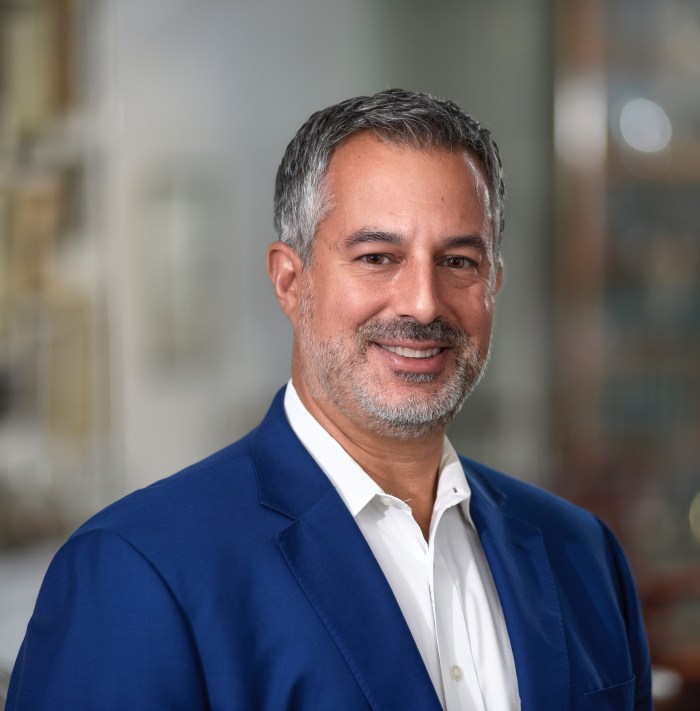
“BCM Ventures was transformational to our commericialization ecosystem in that it positioned the commercialization mission and process within the College, thereby aligning commercialization with the core values and mission of BCM itself,” Petrosino said. “This realignment enabled the commercialization mission to work more effectively with faculty, student and staff priorities. Faculty could now focus on their priorities of publishing papers, writing grants, growing their research programs, while being able to commercialize their intellectual property in a way that isn’t a detriment to those priorities.”
Now, Petrosino hopes to build on that foundation with the Innovation Institute. Being situated at Helix Park in the Texas Medical Center, the Institute is positioned to be a hub for biomedical investment and innovation.
“(The TMC) is the largest medical center in the world; it nucleates research and clinical practice and a very large, diverse population in a large metropolitan hub,” Petrosino said. “From sheer size and infrastructure, Houston has a lot of resources.”
How does Baylor faculty work to commercialize their findings?
Petrosino said the process of commercializing new technologies can be generalized into a stepwise process that is applicable to many fields; they include identification of new intellectual property, evaluating the marketability of that new intellectual property, determining what can be patent-protected, and developing a business plan and commercial path forward.
Across disciplines and specialties at Baylor, the Innovation Institute supports faculty and researchers who also need guidance and expertise from an experienced team of professionals who can provide support, education and business acumen.
“Another important function of the BCM Innovation Institute is to manage and support the portfolio of BCM-related companies and mature technologies as we market them to venture capitalists and investors and pharmaceutical companies – anyone who would potentially partner with us,” he said. “The Innovation Institute also is responsible for educating and growing the next round of entrepreneurs, so we continue to expand our ecosystem.”
Houston is emerging as the “third coast” in biotech innovation and capitalization, Petrosino said, with San Francisco and Boston as the two areas traditionally associated with biomedical commercialization.
“One reason they are so successful is that there is a critical mass of expertise, brain power and capital to build out new companies,” he said. “We have technology that rivals anywhere else in the world, and we are building the capital pipelines needed to establish and grow new companies. But, we need more experienced leaders who have brought drugs to market to help shepherd these new companies to successful outcomes.”
Who in the Baylor community is best suited to start the commercialization process?
Petrosino said starting a business venture is not taught in traditional medical school or graduate school, which is why the Institute is set up to help people get their ideas off the ground and ready to bring to the marketplace.
“Some people are clearly born with an idea and have the entrepreneurial spirit to build their own company and help build an entity to sell or market a technology – to help make a dream reality and to build a business around that,” he said. “Taking that cadre of people who have that drive and determination, and turn them into experienced entrepreneurs — that’s one part of (the institute).”
This education includes helping educate those researchers, clinicians and educators who make the discoveries but who are new to, or may have anxiety about, pursuing an entrepreneurial track, he said.
“Everyone has the potential to be an entrepreneur in one way or another. It’s our goal to help those with brilliant discoveries, and the desire to turn them into a business, by providing the expertise and resources to translate their discoveries to the commercial marketplace so they can benefit patients worldwide,” Petrosino said.
For the idea-makers, the Institute offers:
- Assessing and protecting the intellectual property (IP) of your innovation
- Championing the development of an IP and the best commercial pathway
- Assisting with invention and idea disclosure
- Driving your innovation forward through resources that include a startup incubator, accelerator programs and faculty mentoring and advisory boards
Find more information in the BCM Innovation Institute’s most recent annual report.
By Julie Garcia, senior communications associate in the Office of Communications and Community Outreach
 BCM Family