From 10 a.m. to 4 p.m. Feb. 10, donate blood for Gulf Coast Blood in Rayzor Lounge at main Baylor, 1 Baylor Plaza, Houston; or from 10 a.m. to 2:30 p.m. Feb. 13 at the McNair Campus in conference room B on the first floor. Donors will receive a quarter-zip pullover and will get free A1C testing.
When Jacob Muñoz, a first-year orthotics and prosthetics student at Baylor College of Medicine, was first diagnosed with leukemia at age 13, he was in seventh grade and loved to play on his school’s basketball and football teams.
On the field and court, though, he remembers having bad headaches that became worse over time. Multiple doctors told him they were migraines. But one weekend, he became physically ill because of a massive headache; his doctors blamed dehydration.
Muñoz’s mother was not convinced and said they would not leave until the doctors ran tests on her son. After a series of blood tests, his white blood cell count was “through the roof,” he said. He was diagnosed with Philadelphia-Positive Acute Lymphoblastic Leukemia, a rare leukemia subtype that is considered non-genetic.
“(Doctors said) pretty much if we waited a week later, I wouldn’t have made it,” Muñoz said. “The doctors explained there was no cause for it. At that age, I didn’t know how to deal with it.”
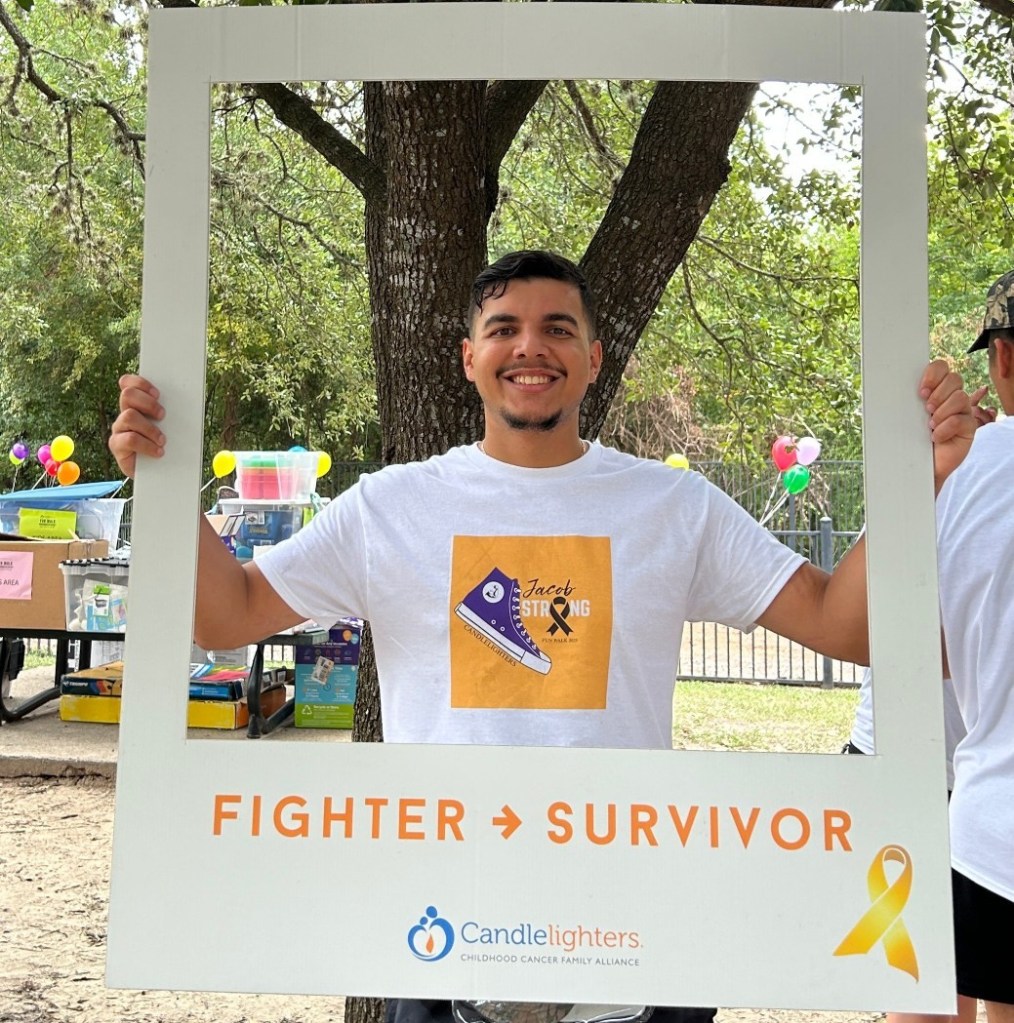
Since his cancer had progressed, treatment began quickly. His 11-year-old brother underwent a bone marrow transplant donation that Muñoz said helped save his life. An intense year of chemotherapy followed, and he spent most of it in a hospital due to a weakened immune system and multiple instances of septic shock. He was treated in intensive care units multiple times between seventh and eighth grade.
At 14, Muñoz went into his first remission, which lasted until he was a sophomore in high school. When the cancer recurred, he underwent radiation and a bone marrow transplant for a second time, and a year later, beat cancer. He has been in remission since.
“Blood transfusions played a major role; I can’t explain the amount of times I had to get blood transfusions,” he said. “Since it’s a blood cancer, we had to get rid of all those blood cells. Checking my levels daily, sometimes I’d have to get an infusion once a week. I think a lot of people don’t fully understand how much donating can help someone.”
Gulf Coast Blood, the blood bank that serves Houston and 26 surrounding counties, has dedicated the February blood at Baylor College of Medicine’s main campus to Muñoz. Kevin Shipley, associate vice president of community engagement at Gulf Coast Blood, said Muñoz and his family have been impactful to the organization.
“When you’re diagnosed with cancer, everyone wants to help, but there’s only so many things you can do to support,” Shipley said. “We meet with families and give them concrete ways people can physically and personally support by hosting blood drives and donating blood.”
Shipley said a large percentage of blood donated goes to cancer patients because of the changes that occur during treatment. Depending on the cancer, patients may require red blood cell transfusions for anemia and platelet transfusions to prevent life-threatening internal bleeding, he said.
“Everyone knows that treatment weakens a patient, but after a blood transfusion, you see life come back into them,” Shipley said. “It gives them that spark, and that spark is what gets them to their next treatment. It’s imperative for patients, but especially cancer patients.”
More than 1,000 people donating blood per day is necessary to serve the Houston area, Shipley said. The blood bank’s mission is to partner with the community and organizations to help sustain lives, whether those are cancer patients or trauma victims.
Baylor has hosted blood drives for Gulf Coast Blood since at least July 2000. Since then, 25,800 blood units have been donated on the College’s main campus, helping more than 7,500 patients.
Muñoz graduated from Sam Houston State University with a degree in clinical exercise science and kinesiology before applying to the Orthotics and Prosthetics Program in Baylor’s School of Health Professions.
Around Gulf Coast Blood, Muñoz’s name is frequently mentioned as someone who not only benefited from blood donations but continues to promote blood donation to his community.
“When we heard he was at Baylor, heard what he’s studying, we knew this represents the benefit of people saving lives through blood donation,” Shipley said. “The effect he will have on the world, that’s the story worth celebrating. That next Jacob is why our whole team wakes up to do what we can for patients. And we need people to step up and donate.”
Story by Julie Garcia, senior communications associate in the Office of Communications and Community Outreach
 BCM Family