In the early morning hours of a warm spring day, the Houston Zoo said goodbye to Baylor the Asian elephant who will now call the Denver Zoo his home. Baylor’s move symbolizes growth, progress and more than 14 years of successful collaboration between Baylor College of Medicine and the Houston Zoo.
From a meeting after losing a baby elephant to elephant endotheliotropic herpesvirus (EEHV) in 2008 to developing a vaccine for the deadly disease that strikes elephants across the globe, the Houston Zoo and Dr. Paul Ling, professor of virology and microbiology at Baylor, have worked together to make strides in fighting the deadly disease, saving countless lives along the way.
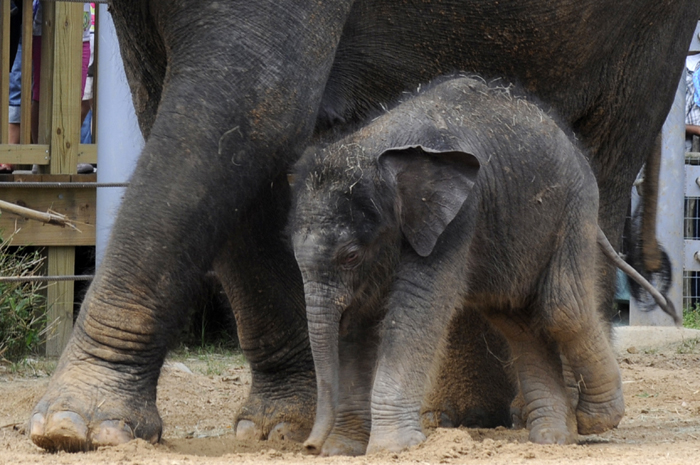
Baylor the elephant as a baby.
“After the death of Mac, a baby elephant, the zoo wanted to be more proactive about the disease, so they approached me as a local herpes researcher to see if I could do anything to help,” Ling said. “I thought about it for a couple of days, and it really came down to, who wouldn’t want to help save baby elephants? So, I tried to find a way to make it work. It turned into a research program I designed called Bench-to-Barn.”
The Bench-to-Barn program had three phases, developing better diagnostics to detect the virus, evaluation of treatments and a longer-term goal of generating an effective vaccine. The biggest immediate impact, Ling said, was working on various diagnostic tests. Soon after beginning the program, Ling and his collaborators developed a QPCR test (rapid test) to detect the varieties of EEHV.
“EEHV is an internal bleeding disease that is difficult to treat, and once it gets past a certain point there is no chance of survival,” said Dr. Christine Molter, animal health director at the Houston Zoo. “It is that early detection that allows us to start lifesaving treatments before it is too late.”
Molter said once this test was in use, it gave way to explore the elephant immune system to see how they respond to the virus, how it is spread, if antibodies are produced and if a vaccine could be produced using this data.
“During this process, the Houston Zoo developed protocols on surveillance for early detection, which helped us determine when an elephant might develop (EEHV) from the different levels of the virus,” Ling said.
Those protocols are now used in zoos and labs across the country and are even used to monitor elephants in wild nature preserves in other parts of the world. Part of that protocol involved behavioral observations.
“If we notice that an animal is acting slightly off – demeanor change, stiffness in legs – we work with our in-house vet team to monitor, and we work with Dr. Ling to run blood tests. We have caught several cases of EEHV early on and were able to treat and save our elephants,” said Kristin Windle, elephant supervisor at the Houston Zoo.
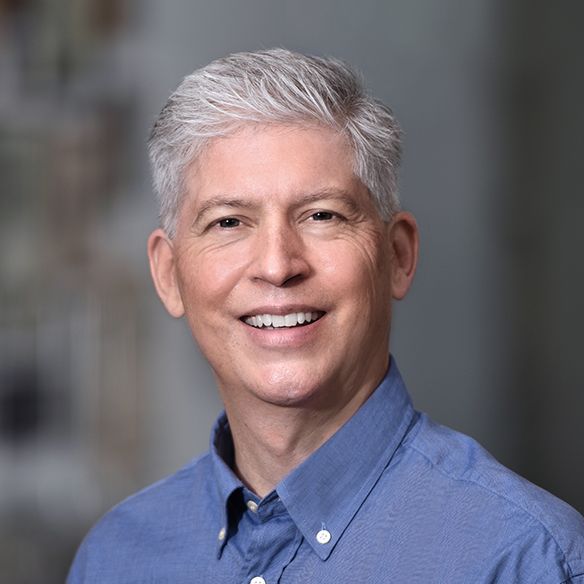
Dr. Paul Ling
The first elephant born at the Houston Zoo after the rapid test was developed was named in honor of Baylor College of Medicine’s collaboration with the zoo. Through Baylor the elephant, researchers learned a lot in those early years. For example, the virus is transferred between elephants most likely from secretions from their trunks. As work continued, Ling worked with the Human Genome Sequencing Center at Baylor to sequence the majority of these EEHV viruses.
“The first complete genome sequence of EEHV 4, one of the major EEHV types, is one we call EEHV4 Baylor because it was derived from his trunk wash,” Ling said.
The latest advancement – a vaccine.
The Houston Zoo’s veterinary and elephant care team recently administered the first dose of an mRNA EEHV vaccine to one of their female elephants, 40-year-old Tess. The vaccine’s effectiveness will be measured by evaluating antibody levels in her blood while monitoring for specific side effects or adverse reactions, such as injection site swelling or allergic reaction. The mRNA vaccine’s development has involved extensive preclinical trials, with positive preliminary results indicating that it can induce antibodies against the virus with no adverse side effects.
“The researchers I’ve worked with here at Baylor and the Houston Zoo – the vet team, the executive staff, the zookeepers – all these accomplishments are because we worked together,” Ling said. “There wasn’t the attitude of ‘Well, this can’t work; that can’t work.’ It was more like, ‘How can we work together to solve a potentially difficult problem?’”
Seeing Baylor the elephant grow up healthy and move on to a different herd is bittersweet, but it will the work needed to fight EEHV.
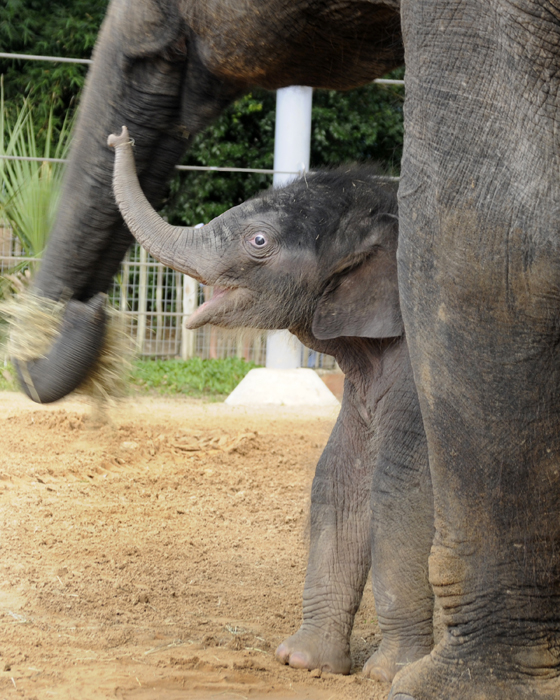
Baylor the elephant as a baby.
“I have worked with Baylor the elephant since he was a year old, and I have seen him and other elephants survive EEHV through the methods we learned from this partnership with Baylor College of Medicine,” Windle said. “It gives us hope for saving elephant lives in the future.”
In Denver, Baylor has been reunited with his brother Duncan who moved last year. Baylor’s involvement in EEHV research will help with the transition and keep testing methods going.
“It’s been really great having Baylor move here with such a strong and well-established blood draw behavior because we were easily able to get samples from week 1,” said Maura Davis, curator of large mammals at the Denver Zoo. “Being able to test for EEHV has been game-changing. We now know which elephants are at higher risk for different strains of the virus, which gives us the ability to make the best management decisions for the individuals. The work that Dr. Ling and the Houston Zoo team has put into EEHV research is incredible. To think of how many elephants are going to be impacted by them is truly inspiring, and I am honored to get to call them colleagues.”
“It was emotional to see him leave Houston, but Baylor really does signify all the accomplishments that we’ve had along the way. Baylor has experienced disease from EEHV but the diagnostics tools (and) the protocols that we developed alongside the Houston Zoo were important for helping to treat and save him.” Ling said. “He is a great ambassador for the success of our program.”
 BCM Family
Pingback: Lings bring their love to Baylor, elephants around world | BCM Family